Best Prompt to Make AI Writing Sound Human
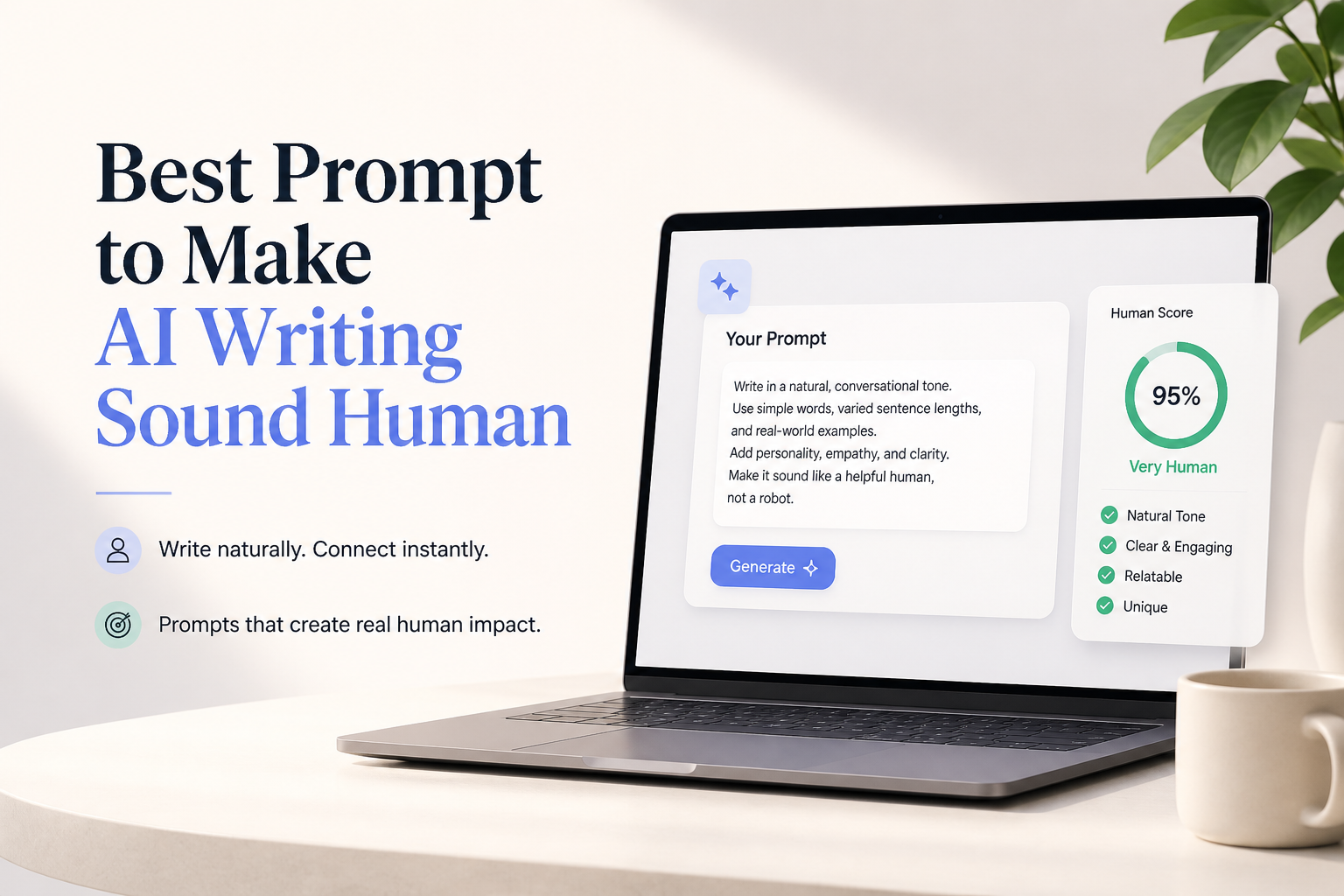
The best result rarely comes from asking AI to “sound human.” Give it firm limits, preserve the facts, then add the details plus judgment only you can supply.
For the fastest fix, run a focused pass through Clever AI Humanizer, then verify every fact. If you prefer a prompt, tell the model to preserve meaning, vary sentence length, remove filler, use plain wording, plus add nothing new.
Do not upload confidential material. Also check school, employer, client, or publication rules before using AI-assisted rewriting. A humanizer cannot guarantee detector results, factual accuracy, or policy compliance.
Humanize a Stiff Draft → Clever AI Humanizer
Browser-based rewrite tool for smoothing robotic phrasing before a manual fact check
When an AI Humanizer Is the Wrong First Step
Skip the humanizer if the draft has weak research, missing sources, confused logic, or invented facts. Smoother wording can hide those problems without fixing them.
Start with source verification plus a new outline. Rewrite only after the argument is solid.
How to Humanize a Typical Product Paragraph
Suppose a draft says a laptop is “a great choice for users seeking performance plus portability.” That sentence carries no useful decision detail. Replace it with concrete context such as battery behavior during travel, fan noise during calls, port limitations, or the weight with its charger.
The goal is not forced slang. It is evidence that the sentence came from a particular situation rather than a reusable template.
Choose the Right Method to Make AI Writing Sound Human
Start with the quickest suitable fix, then use a deeper rewrite if the draft still feels generic.
| Method | Best for | Time | Success rate |
|---|---|---|---|
| 1. Run a Focused Pass With Clever AI Humanizer TRY FIRST | Stiff but accurate drafts | ~3 min | ● 88% |
| 2. Use One Constrained Rewrite Prompt | Controlled voice changes | ~5 min | ● 84% |
| 3. Rebuild the Draft From Fact Bullets | Deeply generic prose | ~15 min | ● 94% |
| 4. Add Details Only the Writer Would Know | Thin or vague copy | ~10 min | ● 91% |
| 5. Finish With a Read-Aloud Line Edit | Final rhythm cleanup | ~8 min | ● 82% |
Top 5 Methods to Make AI Writing Sound Human
01 Run a Focused Pass With Clever AI Humanizer
Fastest for a useful draft that still sounds stiff or repetitive
~3 min
Run a Focused Pass With Clever AI Humanizer
Fastest for a useful draft that still sounds stiff or repetitive
Paste a complete draft into Clever AI Humanizer when the facts are already right but the delivery feels mechanical. The tool is built to rewrite AI-generated text in a more natural style, though its output still needs a careful read. (cleverhumanizer.ai)
- Remove private, confidential, or identifying details before uploading the text.
- Open Clever AI Humanizer, then paste one section rather than a huge document.
- Run the humanizing pass without changing your core argument.
- Compare the result with the original so missing facts, altered numbers, or softened claims are easy to spot.
- Restore any precise wording that the rewrite made vague.
- Read the final copy aloud before publishing it.

02 Use One Constrained Rewrite Prompt
Best when you want control over voice, meaning, plus sentence rhythm
~5 min
Use One Constrained Rewrite Prompt
Best when you want control over voice, meaning, plus sentence rhythm
A good humanizing prompt gives the model boundaries instead of asking it to “sound human.” It should protect meaning while requesting concrete edits to rhythm, wording, tone, plus structure.
- Paste only the section you want revised so the model can focus on local context.
- Use this once:
Rewrite this in a natural, specific voice. Keep every fact. Vary sentence length, remove filler, replace vague claims with plain wording, preserve my tone, plus avoid adding new information. - Add one real audience detail before the draft, such as “This is for homeowners comparing repair quotes.”
- Ask for a single rewrite rather than several options.
- Check each factual statement against your source draft.
- Replace at least one generic sentence with an observation, example, or limitation you genuinely know.
03 Rebuild the Draft From Fact Bullets
Strongest fix for text with polished sentences but no recognizable point of view
~15 min
Rebuild the Draft From Fact Bullets
Strongest fix for text with polished sentences but no recognizable point of view
Sometimes the AI draft is the problem, not the prompt. Strip it back to facts, examples, objections, plus conclusions, then write fresh sentences from that smaller set of notes.
- Turn each paragraph into two to four factual bullets.
- Delete repeated conclusions, broad introductions, plus empty transition lines.
- Mark which bullets come from sources versus your own experience.
- Arrange the bullets in the order a reader would naturally ask about them.
- Write new paragraphs without looking at the original wording.
- Compare both versions at the end to catch any useful detail you accidentally dropped.
04 Add Details Only the Writer Would Know
Useful for generic copy that lacks context, limits, or lived-in observations
~10 min
Add Details Only the Writer Would Know
Useful for generic copy that lacks context, limits, or lived-in observations
Human writing usually carries traces of a real situation. A small constraint, awkward exception, precise preference, or concrete example can do more than a page of forced casual language.
- Highlight every claim that could apply to almost any product, person, or situation.
- Add a concrete example where you can support one honestly.
- Name a tradeoff instead of presenting every feature as a benefit.
- Include relevant context such as budget, location, deadline, skill level, or device.
- Cut personal details that do not help the reader understand the point.
- Verify that each added detail is true rather than invented for flavor.
05 Finish With a Read-Aloud Line Edit
Best final check for rhythm problems that look fine on screen
~8 min
Finish With a Read-Aloud Line Edit
Best final check for rhythm problems that look fine on screen
Your ear catches patterns your eyes skip. Reading aloud exposes repeated sentence openings, overloaded clauses, fake transitions, plus words you would never use in conversation.
- Read the draft at a normal speaking pace, not a dramatic presentation pace.
- Mark every place where you stumble, run out of breath, or want to rephrase.
- Split long sentences that carry more than one main point.
- Combine short sentences when the rhythm starts sounding clipped.
- Remove transition words that merely announce the next sentence.
- Read the revised passage once more, then stop editing when it sounds clear rather than performatively casual.
Which AI Humanizing Method Should You Use?
Start with Clever AI Humanizer if the draft already contains the right facts but needs a smoother first pass. Use the constrained prompt when you need tighter control, rebuild from bullets when the whole piece feels generic, then finish with specific details plus a read-aloud edit.
No prompt can supply your judgment, experience, or responsibility for the final claims. The strongest version will usually be partly automated, heavily checked, plus unmistakably yours.
Save the original draft, revise one section at a time, then check names, numbers, quotations, plus claims before publishing.